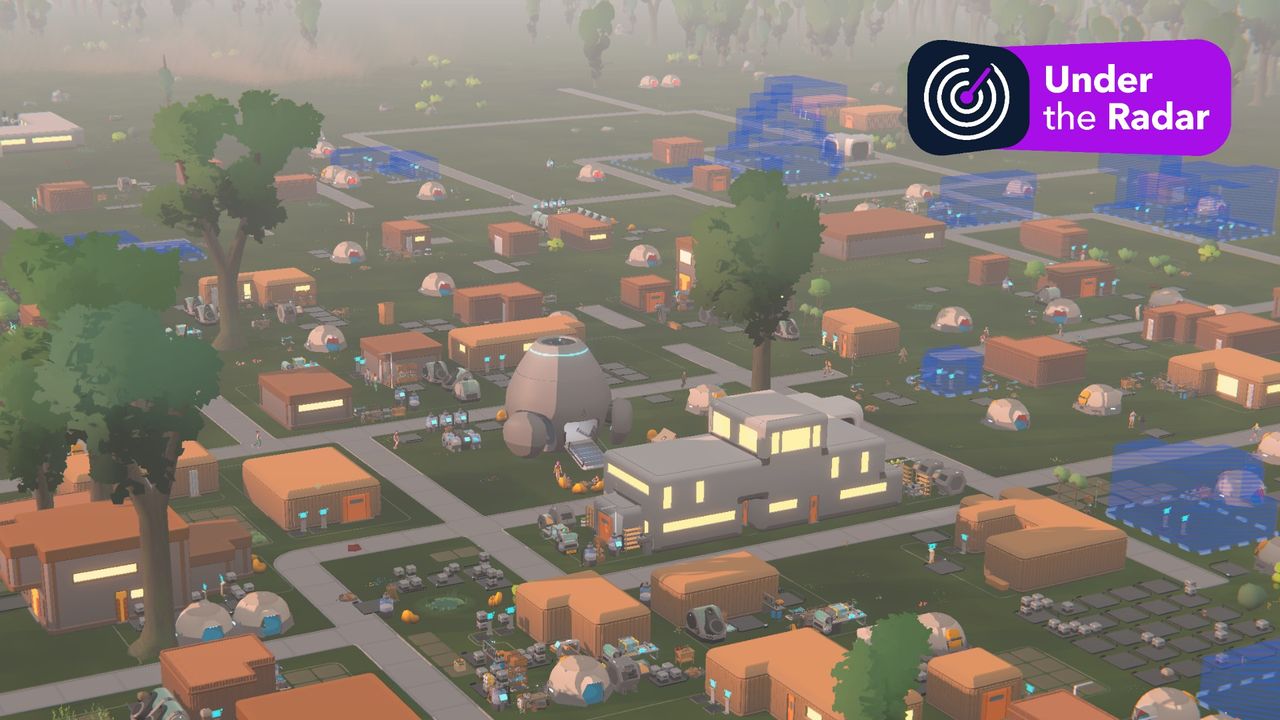

If you’d have told me that in the fine year of 2026, I’d be back to my hobgoblin ways of racing home to pour hours into a massively multiplayer online (MMO) game, I’d probably have laughed you off.
Under the Radar is our way of highlighting great games that might have passed you by. Through a regular mix of news stories and features, we’ll cover great experiences that we feel haven’t found the audience they deserve. Read the full series here.
However, here I am, watching the clock until 5:30 PM so I can race home and log into Seed, a new life simulator from Klang Games that I think could herald a new renaissance for MMOs.
Summer Game Fest 2026 gave my colleague Dashiell Wood the chance to go hands-on with Seed, and his strong first impression held true when I got my hands on an early access code a little under a month ago.
Co-founded by veterans from CCP Games, the creators of Eve Online, the team behind Seed certainly has the credentials If you love games like Eco, The Sims and Factorio, you’ll be just as hooked as I am.
The game has already attracted a healthy audience, with thousands of active daily players. It’s a promising start, though it has to be said that a lot of work will be necessary to retain that audience and continue to grow in the months to come.
Still, I spend every waking moment craving Seed. In the last month, I became mayor, witnessed the rapture, and built a metropolis with total strangers — and I can’t wait to see what the game throws at me next.
A world of our own

In short, your goal in Seed is simple: work with other real players in your randomly generated society and colonize the planet of Avesta, building a thriving community with a local economy and, later, global trade.
Because servers run 24/7, your playable Seedlings continue working and caring for themselves while you’re offline—provided you set them up with balanced automations and basic necessities. There’s even a beta mobile app where you can check in and issue commands via chat; more on that later.
It’s surprisingly challenging, especially if you’re part of a foundling community. Your Seedlings aren’t always easy to keep alive when resources are scarce, meaning access to clean water and cooked food is an urgent undertaking. Seedlings can suffer from various health ailments and even die as they go about their lives; I lost count of how many times mine developed jaundice from compulsively drinking murky water.
It took me a solid week to nail down my Seedling’s schedule — balancing needs against production lines, storage, trade, and resource shortages. At times, it’s a rollercoaster ride: the highs of logging on to see tens of thousands in revenue, and the low sof discovering that one misclick in an “if/then” automation halted all production.
All societies live on one sprawling world map, and as you progress, you’ll be vying with other player groups for territory and resources, and for attracting new players (with their wallets) to your town.
For now, at least, that feels like a distant problem; many societies are still developing. That’s part of what makes Seed so exciting as an MMO; it really does feel like the game is going to keep evolving with its player base, and already the choices from other societies have had a direct impact on how we run our own…
Life as an elected official
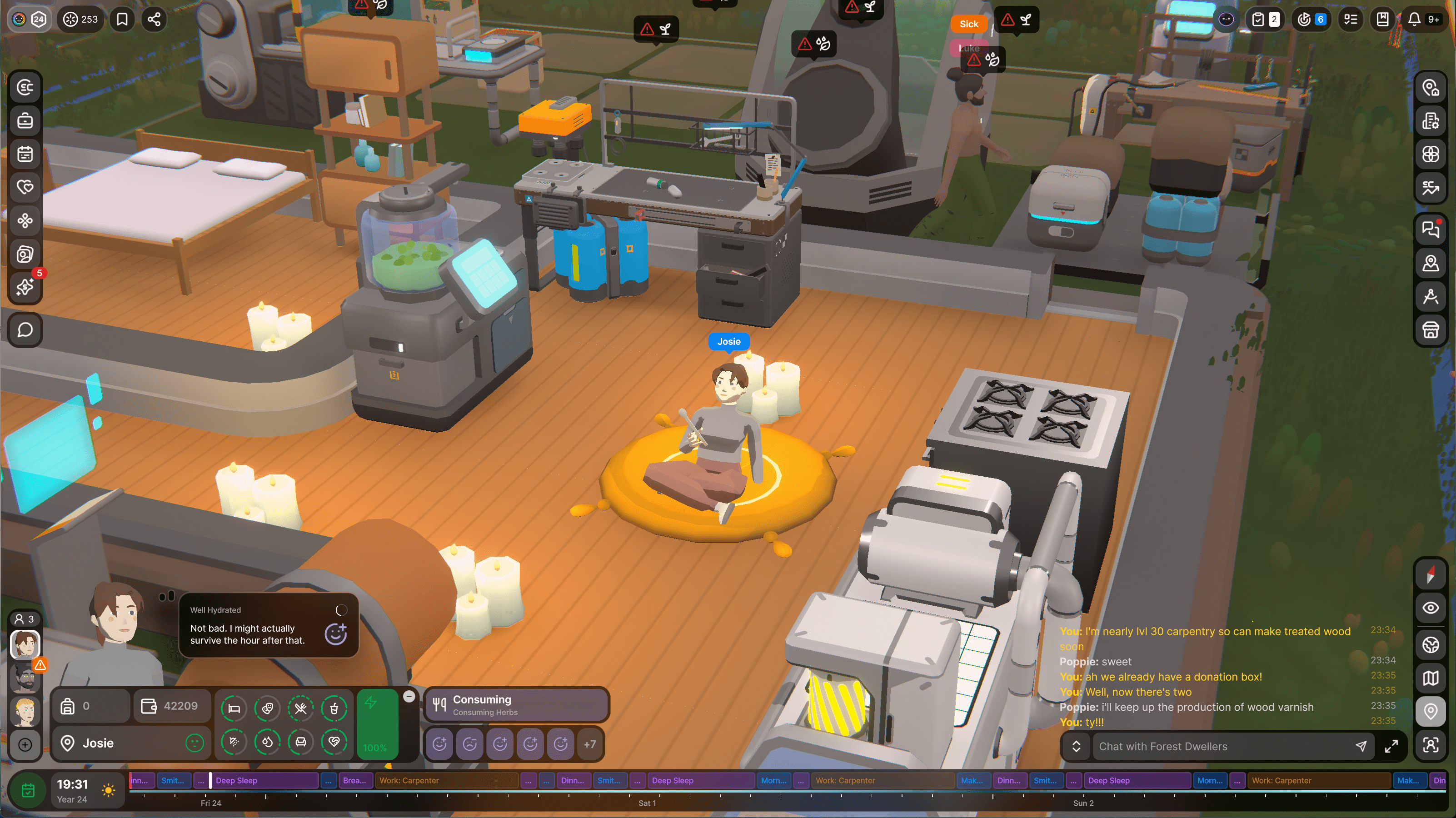
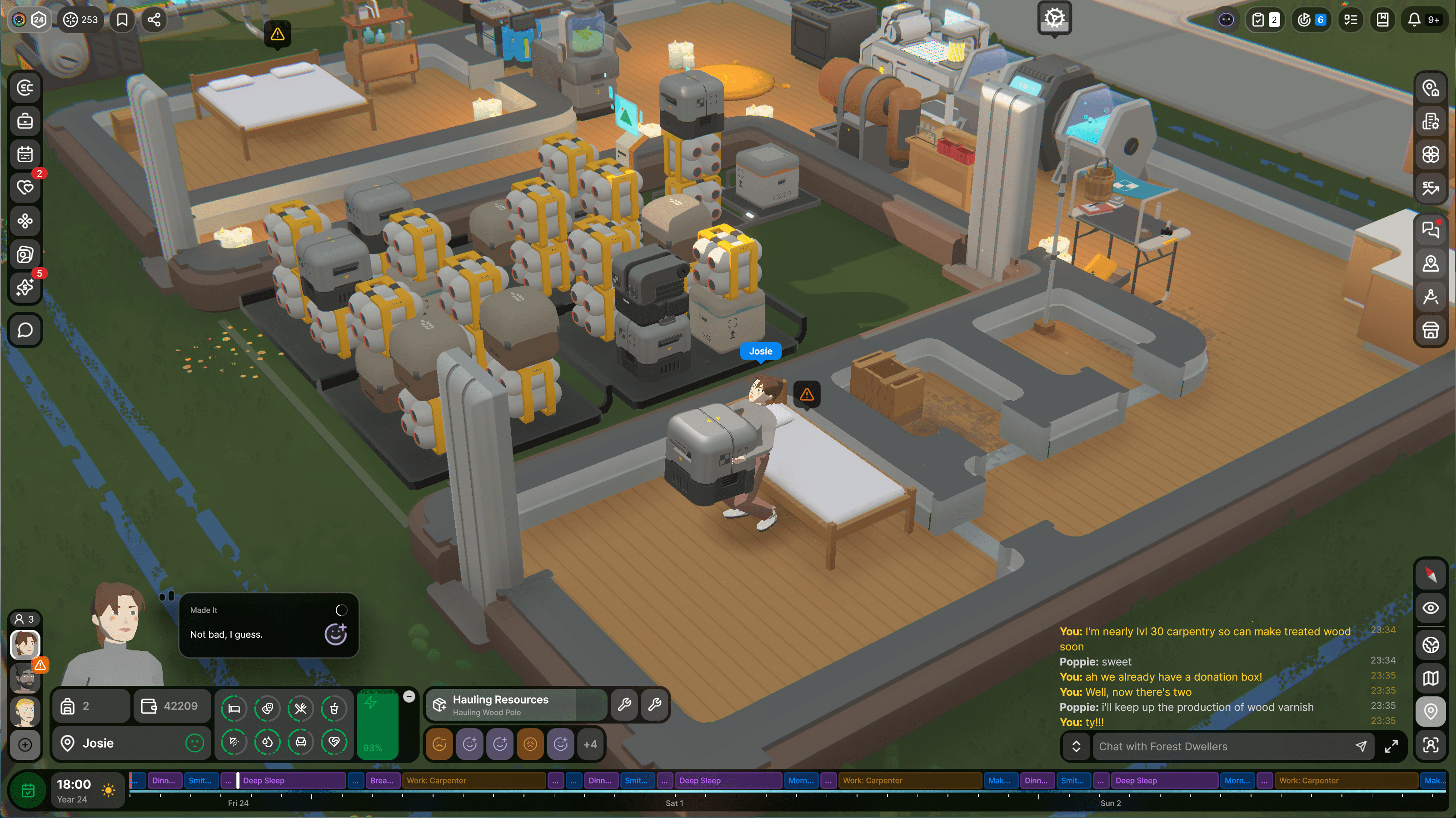
For the past month, my society inexplicably elected me mayor — an honor that gave me a front-row seat to Seed’s complexity. Societies evolve in stages based on shared goals, and with each step you gain new roles in government, features like legislation and slots for more Seedlings to join.
My own community has just become a Metropolis, with several of our more active players quickly training up their Seedlings into careers like carpentry, metalwork, tailoring and medicine. We’ve launched businesses from foundries and chemical plants to hotels and cafes to handle to service the 40+ Seedlings in our group and participate in global trade. It’s tough, but it’s honest work.
I’m also the proud magnate behind a furniture-making business, with my Seedlings specializing in carpentry and tailoring, and I’ve hired several players on the server into the fold to help me haul deliveries and craft furniture both to sell and furnish my two hotel businesses. You’re incentivised to pay your Seedlings well; your society’s average salary and the balance of wealth is a key metric by which to attract new players, as are any society-level benefits you offer new players like bonuses, tax legislation, new business grants and even workers’ rights.
Finding the balance between this and also keeping the game fun for all involved is vital — and challenging. As I write this, a disagreement between two of the larger business owners in my society has led to a small fallout and calls for legislation around land ownership. Trust is essential, but hard-won among strangers.
Surviving the rapture

There have already been quite a few exciting dramas in our society.
We founded on the first day of early access, so many players came through our doors to test the waters in Seed, only to then log out and never return. There are no NPCs in Seed, meaning all members of your society are real people — their activities need to be automated within the Schedule menu, or else your Seedlings will just kind of bimble around aimlessly.
We quickly discovered that even with well-populated schedules, those AFK players wreaked havoc in what I’ve dubbed ‘The Great Haulening’. With many of them set to harvest and haul goods, our society was quickly overloaded with piles of resources and overwhelmed storage that disrupted our ability to trade globally by filling up our mailbox with junk.

Then there are the bugs. Oh lord, the bugs. The marketplace where you trade with other societies has been broken pretty much since day dot, and while recent commitments to fix this from the developers are reassuring, it’s certainly created some disparity among the societies that figured out workarounds and those that couldn’t.
My favorite bug though has to be ‘The Rapture’: the servers went down for two hours, which stopped time fully in Avesta for, to my knowledge, the first time.
All automations were paused, however all Seedling needs continued to depreciate, meaning every player with the companion app got a simultaneous notification that their Seedlings were dying and had to log on in a panic (for me, that was at 2 AM) to revive them. Thankfully, a few of our society members were online to run around and resuscitate the 95% of us who had collapsed, but not everyone was so lucky…
The Achilles heel

While I’m loving the game in itself, another potentially not-so-rosy element to Seed is its divisive use of generative AI.
Now, I’m typically conservative with the technology; I don’t think it should be used unless genuinely additive, especially in gaming, and definitely not frivolously while concerns remain about the impact of AI on our environment.
In Seed, you can use gen AI to chat with your Seedlings, which I’ve used mostly as a way to give them instructions to consume things or do tasks, especially while I’m away from the game and when life-threatening issues arise. You’re also occasionally incentivized to casually chat with them as part of your daily tasks, which is quirky at first but tires quickly.

The second primary use for gen AI is P.A.M, the in-game assistant that can help you learn how to play the game.
With Seed being so complex and in-depth, this is a genuinely useful resource and, by and large, it’s been a helpful companion with all of my requests. It’s a neat way to avoid having a pages-and-pages-long companion guide, but ultimately it’s still prone to getting things wrong, often has broken links and sometimes just gives up and recommends that you ask the World Chat.
It’s not inextricably linked to the gameplay, but it’s also omnipresent, and if you are one to take a bold stance against the use of AI, it’ll potentially put you off this otherwise brilliant game.
That being said, you might also find the pricing structure a turn-off.
You’re given one Seedling slot to play with, which will live for up to 120 real-world days. When they die, you lose everything if you have no other living Seedlings, so you’ll probably want a second Seedling Slot and another Seedling Life — which you’ll have to pay for Pollen, an in-game currency you can earn by levelling up your user profile or with real money.
These come in four tiers, starting with a basic slot that offers 100 real-world days of a Seedling’s life all the way up to Platinum, a permanent slot — full pricing information for all in-game purchases can be found here. This on top of an already $30/€29.99 (roughly £25) game might feel a little too close to a subscription scheme… and it kind of is.
Personally, I enjoy the game enough and understand enough about the costs of server upkeep to justify having spent some of my hard-earned cash on a permanent slot, but for some, the threat of losing everything when their Seedling dies and starting from scratch is disincentivizing. For others, it means an endless opportunity to graft; it’s down to the player to decide what feels more fun to them.
I do share reservations on both the use of AI and the subscription-like costs; but I don’t think either have to define my overarching enjoyment of the game, which has been immense.
I’ve sunk hours and hours into refining my strategy, working with my community towards our shared goals setting up our local economy, and had a good laugh with many of the players I’ve met so far from all around the world.
It’s a real throwback to the heyday of online gaming, and if it sticks, I think Seed could inspire other developers to take a risk on what is, admittedly, a hard product to monetize and upkeep in the increasingly competitive gaming market.
I hope it does, because I’ve definitely got the itch.