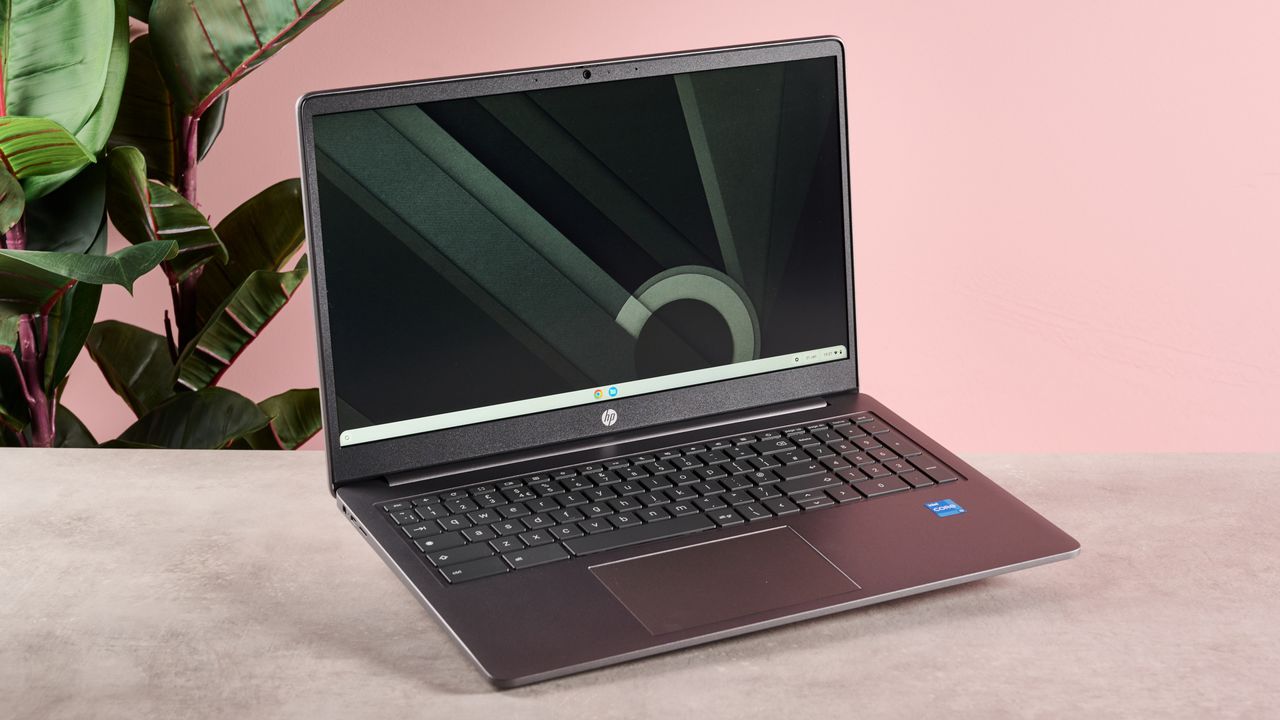

Google has barely uttered a word about its forthcoming Googlebook since its big reveal back in May, a state of affairs that doesn’t inspire much confidence. It’s almost as if the company has been trying to decide how best to deal with the negative reaction towards these incoming laptops, which have an OS that runs not just ChromeOS but also Android apps natively.
This silence has meant that many people have forgotten about the Googlebook. These devices weren’t even mentioned at Computex 2026 (not directly, anyway) and I too had barely thought about them until leaks started popping up recently.
Now, at last, we’ve heard that Google is holding a press event in New York next month at which the media will be able to go hands-on with the new machines. However, this is not an official launch or announcement, and the full details of the Googlebook will be kept under wraps for a bit longer afterwards (as Chrome Unboxed reported earlier this week).
Still, it’s clear that the full launch isn’t too far off, and at any rate, we now know a bit more about these laptops thanks to all the recent leaks.
So, if you still find yourself wondering what the Googlebook is all about — and whether you should wait to buy one, rather than shelling out for a Chromebook right now – I can help. Read on to find out which laptop will be best suited to you, and how these devices fit together in Google’s laptop landscape.
Chromebooks aren’t going anywhere

Google made it clear right from the start that it isn’t doing away with Chromebooks. These devices running ChromeOS will continue to be manufactured alongside Googlebooks, with the latter positioned as a higher-end offering.
This is a crucial factor to consider, because if you think that Googlebooks are going to be anything like affordable, this isn’t the case. Google has said itself that these are ‘premium’ devices and that’s a word which means one thing: they’ll be pricey.
How pricey? Well, that’s obviously still up for debate, but the leaks have shown some notebooks that look distinctly expensive — and with rumored pricing above the $1,000 mark (in the US) thus far. These are just rumors, of course, but the broad expectation is that this will be the kind of price tag you’re looking at with a Googlebook.
So, if you want a Chromebook because it’s a wallet-friendly product, then buy one now without hesitation. Especially given that based on what’s happening with the RAM crisis of late, all laptops are likely to get more expensive as 2026 rolls on; you’ll probably save more than a few notes by buying sooner, rather than later.
Googlebook means more heavyweight performance

Premium doesn’t just mean costly, of course. A high-end laptop will also be expected to perform admirably, to be well-built, and to look good.
We certainly expect Googlebooks to pack a good deal more performance punch than Chromebooks, and they’re designed to run more heavyweight apps, such as Adobe Premiere Pro (as spotted in a leaked photo) — not something that’s possible on a Chromebook.
You’ll also be able to natively run Android apps on the Googlebook, which gives the device a lot of versatility. (Based on rumors, there’s likely to be a ‘handoff’ style feature to work with your Android phone, too). Gemini and AI abilities are also set to feature in the Googlebook, so you’ll be able to get a lot more done in that respect compared to on a Chromebook.
If you’re more of a power-user — and keen to explore AI features (though it remains to be seen exactly what Google will pull off in this department) — the Googlebook will be more your kind of laptop. Everyday users who are just after a laptop to do basic computing tasks, such as browsing, emails, and watching videos, will be fine with a Chromebook.
Two-tier system

What Google is bringing in here is essentially two different tiers of laptops. The Chromebook will remain as the baseline offering, including a few more premium models that’ll drain your wallet by a little more. The Googlebook, meanwhile, will sit right at the top of the tree, with higher price tags (that could potentially be a lot higher).
If you want a solid, everyday, more affordable laptop, just get a Chromebook now. There’s no need to wait for the Googlebook, because it’s not going to do much more for you relative to the far higher price you’ll be paying.
If you want a premium piece of more performant hardware with a more flexible OS that runs Android apps and fully-fledged software such as the likes of Adobe Premiere Pro — and, crucially, if you’re willing to pay for it, then by all means hold out for the Googlebook that’s coming later this year.
That said, those of you who do wait may have to suffer the possible slings and arrows of being an early adopter: namely the kind of bugs and teething troubles that new operating systems often bring with them. Google has a lot going on here, considering that its new platform will be juggling two ecosystems, both desktop and mobile.
So, for those who are diving in at the deep end with a Googlebook right from the off, bear all that in mind, and remember that some Android apps in particular may be flakier until the platform finds itself a more solid footing in time.
I remain concerned that Google hasn’t really sold this new laptop category very effectively yet, and I hope that changes when the NDAs lift after that press event next month, and we all start to get a full look at the capabilities of these devices. Watch this space.